
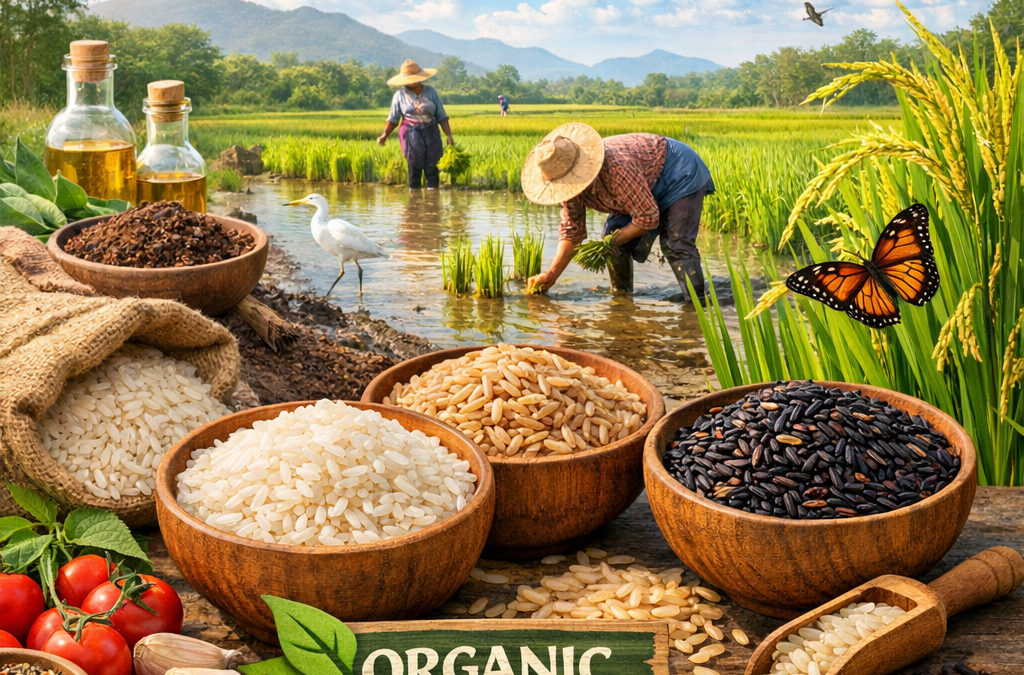
Why One Should Choose Organic Rice
Rice is one of the most widely consumed staple foods in the world, especially in countries like India where it forms a major part of daily meals. With increasing awareness about health, environment, and sustainable agriculture, many people are shifting from conventionally grown rice to organic rice. Organic rice is cultivated without the use of synthetic fertilizers, pesticides, herbicides, or genetically modified organisms (GMOs). Choosing organic rice offers several benefits for personal health, the environment, and farming communities.
One of the most important reasons to choose organic rice is the health benefit it provides. Conventional rice farming often uses chemical pesticides and fertilizers to increase yield and control pests. These chemicals can leave residues on the rice grains that may enter the human body through food consumption. Over time, exposure to such chemical residues may contribute to health problems, including hormonal disruptions and other long-term illnesses. Organic rice, on the other hand, is grown using natural fertilizers such as compost and manure, and natural pest control methods. As a result, it contains significantly fewer chemical residues, making it a safer and healthier option for consumers.
Another benefit of organic rice is its higher nutritional value. Studies have suggested that organic crops often contain higher levels of certain nutrients compared to conventionally grown crops. Organic rice tends to retain more essential minerals, vitamins, and antioxidants because the soil in organic farming systems is healthier and richer in natural nutrients. Farmers practicing organic agriculture focus on improving soil fertility through crop rotation, green manure, and natural soil amendments. Healthy soil leads to healthier crops, which ultimately results in more nutritious food on the consumer’s plate.
Environmental protection is another major reason to choose organic rice. Conventional farming methods rely heavily on chemical inputs that can pollute soil, water, and surrounding ecosystems. Pesticides and fertilizers can run off into nearby rivers, lakes, and groundwater, harming aquatic life and reducing water quality. Organic rice farming avoids these synthetic chemicals, helping protect natural ecosystems and biodiversity. By choosing organic rice, consumers support agricultural practices that reduce pollution and preserve the natural environment for future generations.
Organic rice farming also plays an important role in maintaining soil health. Soil is a living system that contains microorganisms, earthworms, and other beneficial organisms that contribute to plant growth. The heavy use of chemical fertilizers and pesticides in conventional agriculture can degrade soil quality over time, reducing its fertility and productivity. Organic farming practices, such as using compost, crop rotation, and natural fertilizers, improve soil structure and increase microbial activity. Healthy soil not only produces better crops but also stores more carbon, which helps reduce the impact of climate change.
In addition to environmental benefits, organic rice supports sustainable agriculture and fair farming practices. Organic farmers often follow more traditional and labor-intensive methods, which can create more employment opportunities in rural areas. By purchasing organic rice, consumers help support farmers who prioritize sustainability and responsible land management. Organic farming also reduces farmers’ exposure to harmful agricultural chemicals, which can improve their health and overall well-being.
Another advantage of organic rice is its taste and quality. Many consumers believe that organic rice has a richer flavor and better texture compared to conventionally grown rice. Because organic farming focuses on soil health and natural growth processes, the grains often develop more naturally and retain their authentic taste. For people who value the quality of their food, organic rice can provide a more satisfying culinary experience.
Organic rice production also promotes biodiversity. In organic farming systems, farmers often grow multiple crops, maintain natural habitats, and encourage beneficial insects and wildlife. This creates a balanced ecosystem that naturally controls pests and diseases. In contrast, conventional monoculture farming can reduce biodiversity and make crops more vulnerable to pest outbreaks. Supporting organic rice farming helps maintain a healthier and more balanced agricultural ecosystem.
Although organic rice can sometimes be more expensive than conventional rice, many people consider it a worthwhile investment in their health and the environment. The higher price often reflects the additional labor, care, and sustainable practices involved in organic farming. When consumers choose organic rice, they are not only buying food but also supporting a system that values health, environmental protection, and ethical farming.
In conclusion, choosing organic rice offers numerous advantages. It reduces exposure to harmful chemicals, provides better nutritional value, protects the environment, improves soil health, and supports sustainable farming communities. As more people become aware of the impact of their food choices, organic rice is becoming an increasingly popular option for those seeking healthier and more environmentally friendly diets. By incorporating organic rice into daily meals, consumers can take a simple yet meaningful step toward a healthier lifestyle and a more sustainable future.